



New treatment plants in Colombo and Lunugamwehera and a sewerage network in Jaffna will be built alongside reforms to tariffs, governance and the finances of the national water utility.
The Asian Development Bank (ADB) package pairs a US$200 million investment loan for treatment plants and networks with a US$100 million policy-based loan tied to reforms in tariffs, governance and the finances of the national water utility.
The bank announced the approvals in Colombo on 9 November, and ADB Country Director for Sri Lanka Shannon Cowlin said the projects back the government’s efforts “to strengthen water sector governance, improve service delivery, enhance the resilience and financial sustainability of sector institutions, and promote greater private sector participation”.
| US$200m Climate-resilient water supply and sanitation project |
Over 1.3m People with improved water supply in the Western and Southern provinces |
Almost 250,000 People with better sewerage and sanitation in Jaffna |
A US$200m loan for new plants and sewerage networks
The Climate-Resilient Sustainable Water Supply and Sanitation Project will improve access to reliable, safe water for more than 1.3 million people in the Western and Southern provinces, while upgrading sewerage and sanitation for almost 250,000 people in Jaffna, in the Northern Province. The loan comes entirely from ADB’s ordinary capital resources, the bank’s standard lending window on near-market terms.
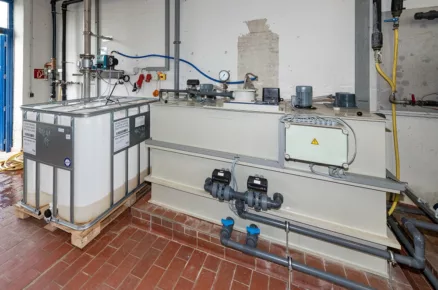
In Colombo and Lunugamwehera the project will build new climate-resilient water treatment plants, transmission and distribution networks and storage reservoirs, while Jaffna will get wastewater treatment facilities, sewerage networks and pumping stations. It also targets non-revenue water and renewable energy use.
The Ministry of Housing, Construction and Water Supply is the executing agency, and the National Water Supply and Drainage Board (NWSDB), the state utility, will handle procurement and have its capacity strengthened under the project.
The water supply component will rehabilitate and expand coverage to about 155,000 households in eight towns of the two provinces, with a target of 95% population coverage in the project areas. The project also applies a district metered area approach, aims to narrow the gap between rural and urban service levels and plans to switch supply from groundwater to surface water sources.
Budget support tied to governance and resilience reforms
The other operation is the US$100 million second subprogramme of the water supply and sanitation reform programme, ADB’s first policy-based lending programme in the country’s water sector. Under this modality the funds support the national budget rather than specific works, and each subprogramme is approved after the government has completed a set of agreed policy actions.
The new tranche is split equally between ordinary capital resources and concessional lending, at US$50 million each, and rolls out nationwide the reforms whose legal and institutional foundations were laid in the first phase.
Its governance strand covers amendments to the National Water Resources Policy, tariff reforms and the adoption of a resilience roadmap for the water supply and sanitation sector. At the NWSDB, it involves implementing the utility’s financial sustainability roadmap and strengthening corporate performance management, while greater private sector participation is meant to mobilise financing for future investment.
A second strand deals with water resources management, water safety, sanitation management and adaptation to natural hazards. Both strands build on a first subprogramme of US$100 million in concessional lending, which ADB approved on 10 September 2024.
Source: https://tinyurl.com/36kvzrua