



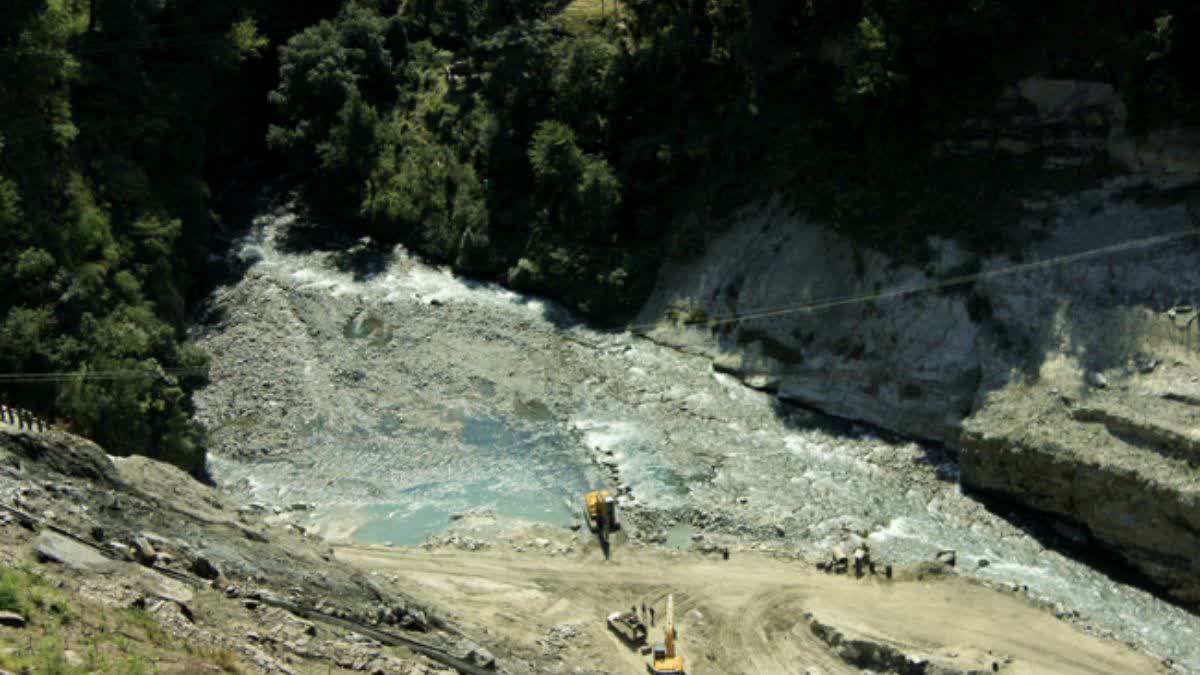
Himachal, Delhi, Rajasthan, UP, Haryana, Uttarakhand will benefit from the Kishau Dam project. However, this project will impact the villages, forests, and culture of Himachal.
Shimla: The Kishau Dam Project, set to be constructed on the Tons River flowing along the border of Himachal Pradesh’s Sirmaur district and Uttarakhand’s Dehradun district, is expected to benefit the states of Himachal, Uttarakhand, Uttar Pradesh, Delhi, Haryana and Rajasthan with abundant supply of drinking water and electricity.
But the centrepiece of the project — the gravity dam at Sambarkheda — is also expected to affect more than 5,000 people across at least 17 villages, impacting local settlements, forests, and cultures.
The Kishau Dam Project
The project has been on the anvil since the 1940s. The Rs. 15,000 crore project, expected to produce 422MW hydel power from a 236 m tall, 680 m long gravity dam that will be taller than the one at Bhakra, was declared a “project of national importance” in 2008.
It recently returned to the spotlight following a meeting held earlier, led by Union Home Minister Amit Shah. At the meeting, Himachal Chief Minister Sukhvinder Singh Sukhu advocated for the state’s interests and secured an agreement whereby the cost of the project’s power component, coming to around Rs. 2,000 crore, would be borne by the downstream states set to receive water from it.
The agreement broke an eight-year-long deadlock, with Himachal not having to face any significant expenditure for the project’s construction, 90 per cent which will now be covered by the Centre, while upon completion, the state will receive annually 100 crore units of electricity, valued at Rs. 600 crore.
The reservoir of the Kishau Dam is projected to have a live storage capacity of 1,324 million cubic metres of water, of which, Haryana will receive the largest share at 571 million cubic metres annually, while UP will get 371 million cubic metres, Rajasthan 111 million cubic metres, Uttarakhand 31 million cubic metres, and Delhi 72 million cubic metres. The water from the dam will irrigate 97,000 hectares of land.
Benefits For Many, Displacement For Pahadis
Despite the many projected benefits of the dam, CM Sukhu shared words of caution, saying, “Many states are beneficiaries of this project of national importance. The Himachal government is aware of its rights, and that of its people. The state government has been sensitive about rehabilitation and will remain so in the future.” It brought the spotlight back on the uncertainty over the displacement it will cause.
The project’s dam will create a massive water reservoir spanning 32 sq km, affecting several villages in the Tons valley, with the Shillai area of Himachal’s Sirmaur district to be most impacted. Villages across five panchayats in Shillai — Balikoti, Kando, Dharwa, Chamra Mohrad, and Siyasu — will have to be displaced. Based on the 2011 Census, this will affect 632 joint families and 508 single families, affecting 175 permanent houses and 15 temples, besides requiring the felling of over 80,000 trees.
Taking both Uttarakhand and Himachal into consideration, the project will affect several roads, and around 40 revenue villages, inundating thousands of hectares of land currently used to cultivate ginger and off-season vegetables.
Source: https://tinyurl.com/32xvfaar