



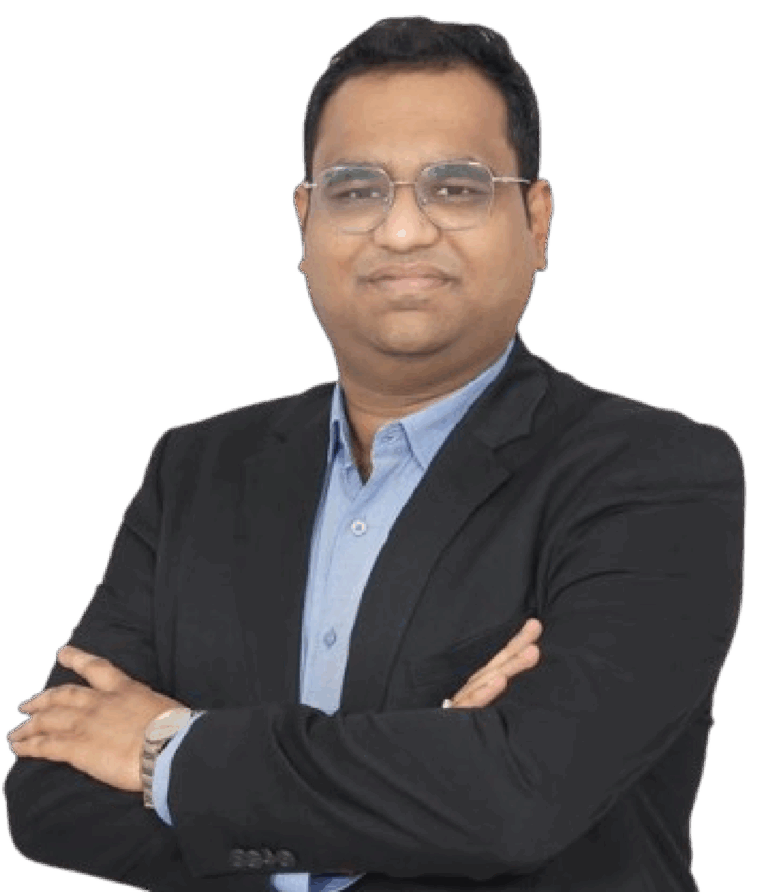
Interview with– Mr. Abhishek Tikmani, Director & CEO, Arvind Envisol
In an era where water has become one of the most critical constraints for industrial growth, the textile sector stands at the centre of both the challenge and the solution. As global supply chains tighten sustainability norms and buyers demand measurable environmental accountability, water efficiency is no longer optional—it is strategic.
At the forefront of this transformation is Arvind Envisol, the environmental solutions arm of Arvind Limited, redefining industrial water management through integrated engineering, advanced technology platforms, and lifecycle-driven cost optimisation.
In conversation with The Textile Magazine for the BharatTex 2026 Special Edition, Mr. Abhishek Tikmani, Director & CEO, Arvind Envisol, shares insights on how the company is shaping the next phase of Zero Liquid Discharge (ZLD), circular water systems, and industrial sustainability.
From Effluent Treatment To Full-Stack Water Intelligence
“Today, the expectation is no longer just treatment—it is complete water intelligence across the lifecycle,” says Mr. Tikmani.
What began as a textile-driven effluent treatment capability has now evolved into a full-stack environmental solutions platform covering:
- Effluent Treatment Plants (ETP)
- Sewage Treatment Plants (STP)
- Zero Liquid Discharge (ZLD) systems
- Ultra Pure Water (UPW) systems
- Desalination and high-recovery RO systems
- Industrial water audits and digital monitoring
- Operations & maintenance (O&M) services
- In-house manufacturing of critical components
The Core Focus: Lowering Lifecycle Cost, Not Just Capex
A defining philosophy at Arvind Envisol is that sustainability must also be economically viable.
“Most customers compare capital cost. We design for lifecycle cost,” explains Mr. Tikmani.
This approach considers energy consumption, chemical usage, maintenance intensity, downtime risk, and water recovery efficiency over 10–15 years.
Engineering Integration: The Shift To In-House Manufacturing
A major strategic shift in recent years has been in-house manufacturing of key components.
“We wanted to remove dependency gaps in performance and service,” says Mr. Tikmani.
This ensures faster execution, higher reliability, and better lifecycle performance.
Textile Industry: The Most Complex Water Challenge
“Textile effluent is not uniform—it changes with every process,” he notes.
Solutions are tailored for dyeing, printing, and high-TDS effluents with high recovery systems enabling reuse in production cycles.
Digitaliastion And Circular Water Economy
“We are moving toward predictive and intelligent water systems,” he explains.
Remote monitoring, analytics, and automation enable circular water reuse models.
Beyond Textiles: Expanding Industrial Footprint
Arvind Envisol now serves chemicals, pharmaceuticals, food processing, and municipal sectors.
Sustainability With Scale: The Future Outlook
The future will be defined by convergence of engineering, sustainability, and business performance.
“Industries will not adopt sustainability as a separate function,” he says.
Conclusion
Arvind Envisol aims to enable industries to grow without adding pressure on freshwater resources.
Source: https://tinyurl.com/ypxtt2tk