



Delhi Chief Minister Rekha Gupta approved a package of projects worth over INR 1,000 crore on 24 May 2026 to accelerate Yamuna rejuvenation and strengthen the capital’s water management infrastructure. The approvals, being executed in mission mode under the state government’s Yamuna clean-up drive, cover the installation of 12 new decentralised sewage treatment plants in the Najafgarh region, upgradation of the Keshopur Sewage Treatment Plant, rehabilitation of a major trunk sewer line in East Delhi, and a new push on rainwater harvesting and groundwater recharge across the city.
The Delhi government approved a series of infrastructure projects worth over INR 1,000 crore on 24 May 2026 aimed at reducing the volume of untreated sewage entering the Yamuna River, with Chief Minister Rekha Gupta describing the initiative as a mission-mode effort to transform the capital into a clean, green, and water-secure city. The single largest component of the package is the construction of 12 new Decentralised Sewage Treatment Plants in the Najafgarh region, to be developed under the Central Government’s AMRUT scheme at an estimated cost of INR 860 crore.
Together, these plants will have a combined sewage treatment capacity of 46.5 million gallons per day. The approved sites include a 17 MGD plant at Mitraon, four plants at Kair, Kanganheri, Kakrola, and Dichaon Kalan, three plants at Galibpur, Sarangpur, and Shikarpur, and four plants at Hasanpur, Jaffarpur, Kazipur, and Khera Dabar. The government stated that the plants are specifically designed to intercept untreated sewage before it enters the Najafgarh Drain one of the primary contributors of pollution to the Yamuna and the collective infrastructure is expected to benefit more than 121 unauthorised colonies, 35 villages, and approximately seven lakh residents.
In addition, the government approved the upgradation and capacity expansion of Phase I of the Keshopur Sewage Treatment Plant from its current 12 MGD to 18 MGD, at an estimated cost of INR 122 crore. The project includes an 11-year operation and maintenance component and is intended to ensure that the quality of treated water conforms to the latest prescribed standards, with an emphasis on promoting recycled water use and strengthening water conservation in the city. In East Delhi, the rehabilitation of a major trunk sewer line running from Amichand Chowk to the Old Kalyanpuri Sewage Pumping Station in the Trilokpuri assembly constituency has been approved at a cost of approximately INR 57 crore.
The sewer line is more than 40 years old and has recorded multiple cave-ins and technical failures in recent years. Its rehabilitation is expected to make the area’s sewerage network significantly more reliable and structurally sound. On the water conservation side, the government announced that the Delhi Jal Board will undertake the construction of new rainwater harvesting structures and restoration of existing ones across departments, with the explicit aim of improving groundwater levels across the capital. To support implementation, four groundwater experts and ten rainwater harvesting social mobilisers will be appointed.
A new underground reservoir with a capacity of 0.72 MGD has also been approved as part of the package, along with associated boosting infrastructure to strengthen water supply in targeted areas. The projects collectively represent the Delhi government’s attempt to address Yamuna pollution at its source through sewage interception before it reaches the river rather than relying solely on downstream remediation.
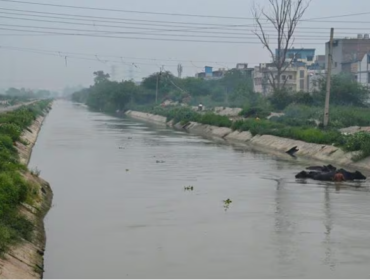
The Najafgarh Drain, which carries industrial and domestic effluent from large parts of west and south Delhi into the Yamuna, has been identified as a principal pollution corridor, and the decentralised plant approach in that corridor reflects a targeted intervention strategy. Separately, on 14 June 2026, Chief Minister Gupta led a Yamuna Riverbank Cleanliness Campaign, with simultaneous cleaning drives conducted across 28 ghats and riverbank locations in Delhi, reinforcing the government’s public-facing dimension of the broader rejuvenation effort.
Source: https://tinyurl.com/4hvnp38u