

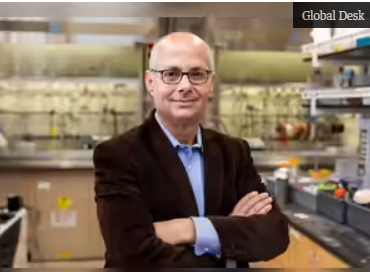
Professor Omar Yaghi, a 2025 Nobel Prize-winning chemist, has developed a revolutionary machine that extracts drinking water directly from the air. Using metal-organic frameworks (MOFs), highly porous materials created via reticular chemistry, the device captures water molecules even in low humidity. Powered only by sunlight or low-grade thermal energy, it functions off-grid, generating up to 1,000 liters of clean water every day.
Professor Omar Yaghi, a chemist at the University of California, Berkeley and a 2025 Nobel Prize winner, has created a machine capable of generating up to 1,000 litres of clean water every day from surrounding air. Developed by his technology company, Atoco, the device functions efficiently even in places with less than 20% humidity, upbringing hope to communities struggling with severe water scarcity.
How the Technology Works
The breakthrough is grounded in reticular chemistry, a field conceived by Yaghi. The major innovation is in Metal-Organic Frameworks (MOFs) synthetic, extremely porous substances designed at the molecular scale. Just a few grams of MOFs can offer a surface region that is equal to that of a football arena. These materials act like microscopic sponges, trapping water molecules from the air as it passes through the device.
When heated by ambient sunlight or mild thermal energy, the MOFs release the trapped moisture as vapour, which then condenses into liquid water. Unlike traditional atmospheric water generators that need electricity-intensive cooling, Yaghi’s system operates off-grid, powered completely by solar heat.
Addressing a Global Water Crisis
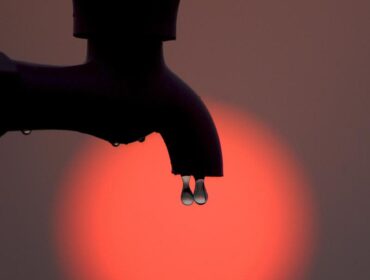
This invention comes at a critical time, as the United Nations warns of a “global water bankruptcy”. More than 2 billion people now lack access to safe drinking water, and conventional solutions such as desalination are both energy-intensive and environmentally taxing because of brine waste.
Yaghi’s water harvester features a portable, eco-friendly solution. About the size of a 20-foot shipping container, units can be used in disaster-struck regions, remote desert communities, or islands impacted by hurricanes. In the Caribbean, where storms like Hurricane Beryl resulted in widespread destruction, these machines could offer rapid relief without depending on local power grids.
“Hurricanes such as Melissa or Beryl unleashed heavy flooding, destroying homes and crops and impacting thousands of lives in the Caribbean,” Yaghi stated. “This devastation is a stark reminder of the urgent need for enhanced water supply resilience in vulnerable areas, particularly small island nations susceptible to extreme weather events.”
A Personal Mission Yaghi’s commitment to this initiative is deeply personal. Growing up in a refugee community in Jordan, he encountered life without running water and recalls the neighbourhood “whisper” when the water truck arrived, initiating frantic efforts to get water before it ran out. “The science is here; what we need now is the courage to scale these solutions,” he mentioned during a recent field test. He envisions a future of “personalised water”, where households can produce their own drinking water much like solar panels enable homes to generate electricity, minimising dependence on centralised systems.
Field Applications and Community Impact In Grenada, mainly on the islands of Carriacou and Petite Martinique, Yaghi’s technology is being explored as a solution for communities still impacted by water shortages following Hurricane Beryl in 2024. Local government official Davon Baker highlighted the significance of decentralised water systems: “The high cost and carbon intensity, as well as the contamination risk, of water importation; vulnerability of centralised systems to hurricane damage; and the need for decentralised solutions that can operate when traditional infrastructure fails.” Yaghi explains his invention as “a science capable of reimagining matter”, urging global leaders to adopt scientific strategies for climate and challenges.
According to the UN, nearly three-quarters of the world’s population live in water-insecure countries. Almost 2.2 billion people lack safely managed drinking water, and four billion encounter extreme scarcity for at least a month annually. Innovations like Yaghi’s MOF-based water harvesters could be a significant role in ensuring sustainable access to water for future generations.
Source: https://tinyurl.com/2ty4v25y