



Nanjing University researchers develop a sensitive method to detect overlooked biological effects of complex chemical mixtures in water.
Water that meets conventional quality standards may still contain chemical mixtures capable of affecting living cells. Researchers at Nanjing University have developed a new method that detects subtle changes in neuronal electrical activity, revealing biological effects that routine water quality measurements may overlook.
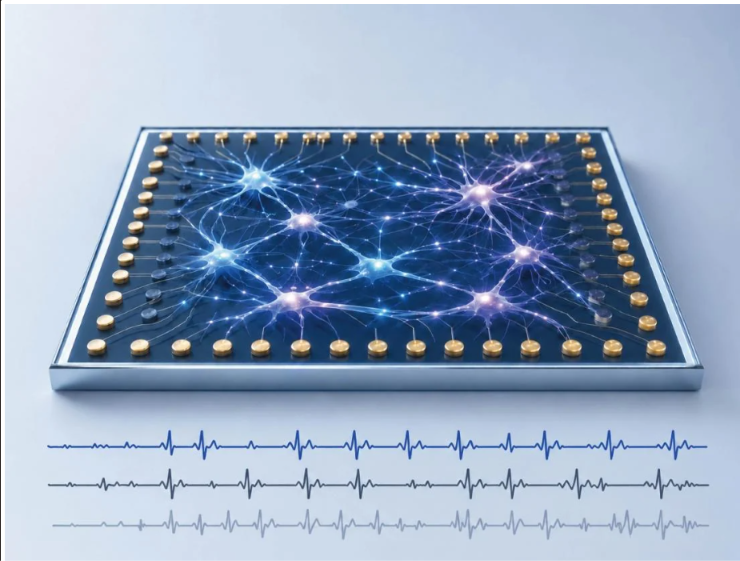
Published in Environmental Science & Technology, the study introduces an in vitro functional neurotoxicity testing method (iFNT) that uses high-density microelectrode arrays (HD-MEAs) to monitor electrical signals across living neuronal networks. Unlike conventional morphological assays, which examine changes in neuronal structure, iFNT measures how neurons fire and coordinate their activity.
Looking beyond conventional water quality indicators
Wastewater treatment plants are commonly evaluated using indicators such as chemical oxygen demand, nitrogen and phosphorus. Although these measurements are essential for assessing treatment performance, they do not directly reveal how residual chemical mixtures affect biological systems.
Environmental waters can contain pharmaceuticals, pesticides, industrial chemicals and their transformation products. Identifying individual pollutants is only part of the challenge; understanding their combined effects on living cells is considerably more difficult.
Neuronal networks provide another perspective. Even when neurons retain their normal appearance, the electrical signals coordinating their activity may be disrupted. Monitoring these signals could therefore reveal functional effects that structural observations alone may miss.
“Chemical measurements are important, but they cannot tell us everything about the biological effects of water,” said Haidong Hu, corresponding author and professor at Nanjing University. “We wanted to explore whether neuronal electrical activity could offer additional insight into the risks posed by complex environmental mixtures.”
Listening to the electrical signals of neurons
The team cultured primary rat cortical neurons on HD-MEA chips, enabling simultaneous recording of electrical activity across multiple locations. Fourteen electrophysiological parameters were analysed to capture different aspects of neuronal firing, bursting and network synchronisation.
The researchers first tested individual neuroactive chemicals and a representative mixture, comparing iFNT with a conventional neurite outgrowth (NOG) assay. The results showed that iFNT was 5 to more than 500 times more sensitive for individual chemicals and approximately 50 times more sensitive for the mixture. Some functional responses were detected at concentrations as low as 10-8 mol/L.
The method was then applied to water samples from municipal wastewater treatment plants and receiving waters. Importantly, the samples were tested directly, without solid-phase extraction or preconcentration. For these environmental samples, iFNT was 3 to 145 times more sensitive than NOG.
The findings demonstrate that neuronal electrical recordings can reveal responses to real world chemical mixtures that may be less apparent in conventional structural assays.
A complementary perspective on water quality
The researchers also compared neuronal responses with routine water quality indicators across different wastewater treatment stages. No statistically significant associations were found between electrophysiological profiles and conventional indicators, including chemical oxygen demand, ammonia nitrogen, total nitrogen and total phosphorus. Neuronal responses also showed no significant correspondence with the zebrafish toxicity endpoints examined in the study.
Rather than suggesting that existing monitoring methods are inadequate, these results highlight that different approaches capture different aspects of environmental quality. Chemical measurements describe pollutant levels, while biological tests assess responses to exposure. Neuronal network activity offers an additional functional perspective.
The method is not intended to replace existing monitoring tools. As the study used primary rat cortical neurons, further validation with other neuronal models and environmental samples is needed before its broader applicability can be established.
Source: https://tinyurl.com/4cpvrv8u