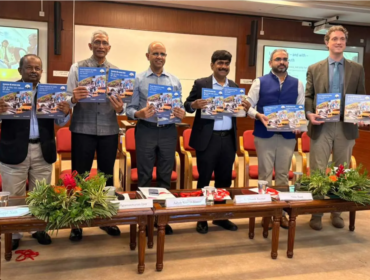




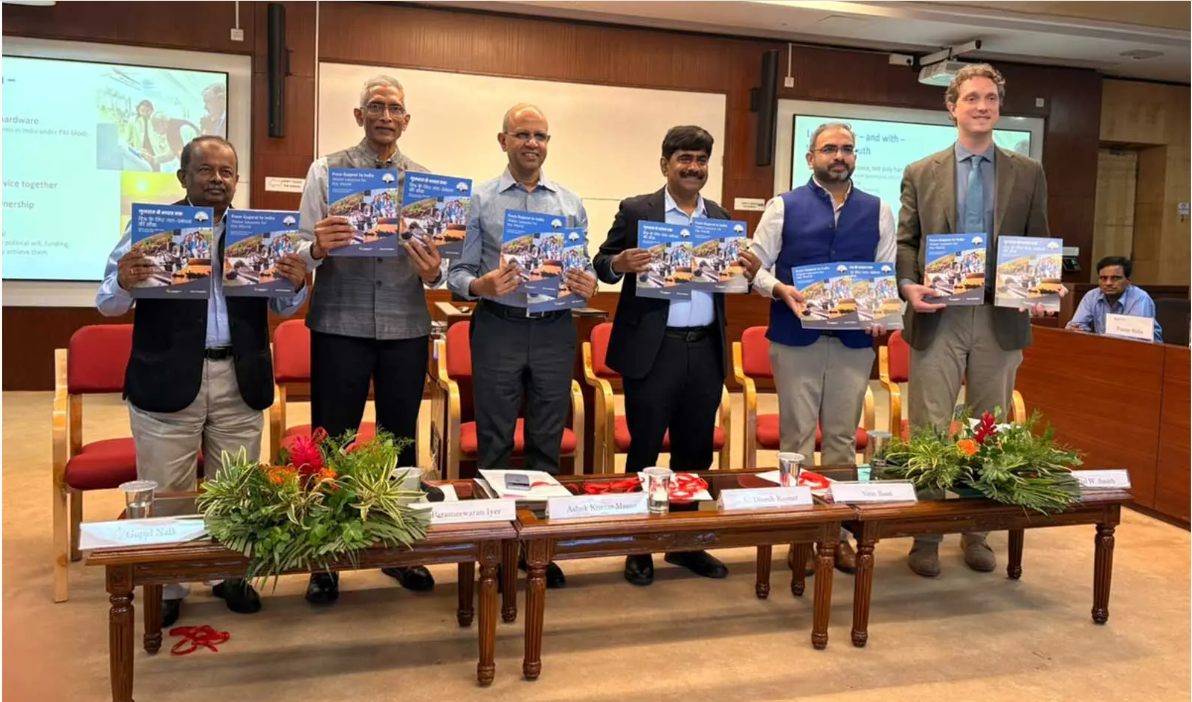
A new case study titled From Gujarat to India: Water Lessons for the World documents 25 years of India’s water governance progress, highlighting the transition from state reforms in Gujarat to national-level implementation. The study was authored by Daniel W Smith, Nitin Bassi, and Parameswaran Iyer, and published by George Mason University in partnership with the Gates Foundation.
George Mason University, represented by Assistant Professor Daniel W Smith, played a key academic role in the research. The case study identifies four critical lessons for countries in the Global South: strong governance, integrated water-resource management, community ownership, and ambitious implementation supported by political will and financing.
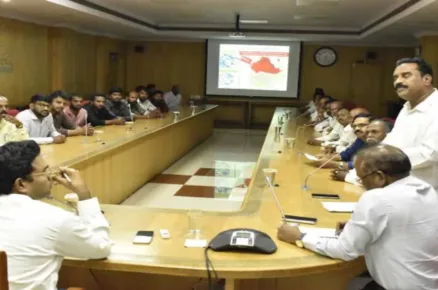
The study traces the journey beginning in Gujarat under Chief Minister Narendra Modi in 2001, during a period marked by recurrent drought and water scarcity. The state’s response combined large-scale infrastructure, groundwater recharge, conservation efforts, water-use efficiency improvements, institutional reforms, and community participation. Between 2001 and 2014, Gujarat’s water governance reforms served as a testing ground for approaches later adopted nationally post-2014.
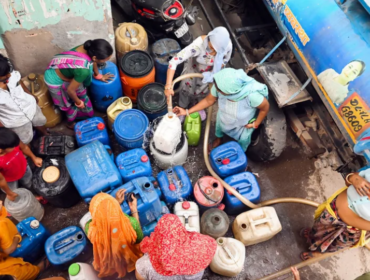
Financial and access improvements illustrate the scale of transformation. Union water-sector allocations rose from 0.8 per cent of the total Union budget in 2001-02 to 2.2 per cent in 2025-26. Rural India has seen an increase of 464 million more people with access to safely managed drinking water since 2000, while rural household tap coverage grew from 17 per cent in 2019 to over 80 per cent in 2026.
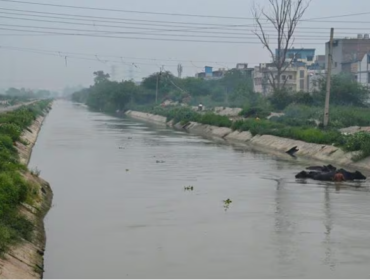
Gujarat’s strategy integrated the Narmada-based water grid with institutions such as the Water and Sanitation Management Organisation (WASMO) and village-level Pani Samitis, alongside extensive water conservation and groundwater recharge initiatives. By 2013, over 76,000 check dams had been constructed under the Sardar Patel water conservation programme. This experience influenced national schemes including Jal Jeevan Mission, Jal Shakti Abhiyan, Namami Gange, Atal Bhujal Yojana, Per Drop More Crop, and AMRUT. The establishment of the Ministry of Jal Shakti in 2019 provided a unified institutional structure for drinking water, sanitation, and water-resource management.
Daniel W Smith stated, “India’s water journey offers lessons well beyond its borders. The central message is that water security at scale requires strong water governance. Countries across the world can learn from these governance lessons and adapt them to their own circumstances as they work toward universal and sustainable water security.”
The study positions India’s experience as a practical example for other countries with similar challenges, given its vast rural population, rapid urbanisation, climatic diversity, and extensive development needs. It offers adaptable approaches suitable for countries across the Global South.
Prime Minister Narendra Modi previously highlighted how India’s water-governance model provides useful lessons for the wider Global South, emphasising that water security involves not only infrastructure but also effective planning, robust local systems, and community involvement.
He remarked, “India’s journey from water reforms in Gujarat to large-scale national programmes offers a practical example for countries looking to improve water management and meet growing water needs.”
Source: https://tinyurl.com/34tbf5zv