



The model will be loaded with the location, age, material used and diameter of pipelines. It will also have information on complaints received from different areas to help the model provide a prioritised list of pipelines to be changed.
Bengaluru’s Unaccounted for Water (UFW), a key measure of water wastage during supply, stands at 32.84% despite falling from 48.45% in 2015-16. This means that even to this day, nearly onethird of the water Bengaluru gets from Cauvery is either lost to leakages or is drawn out illegally.
The figure assumes significance amid the city’s dependence on Cauvery river and the risks of water shortage during every summer.
To bring this down further, the Bengaluru Water Supply and Sewerage Board (BWSSB) has decided to tap water management startups to create a model that can predict water leakages and pipelines that need to be changed.
The model will be loaded with the location, age, material used and diameter of pipelines. It will also have information on complaints received from different areas to help the model provide a prioritised list of pipelines to be changed.
“The model will be fed with all the legacy data to make predictions on pipeline leakages. We have a pipeline network of over 10,000 km, which is difficult to constantly monitor or predict leakages. The model is expected to help us understand the network better and prioritise pipelines that have to be changed,” Dr Manjula N, Chairperson, BWSSB, told DH.
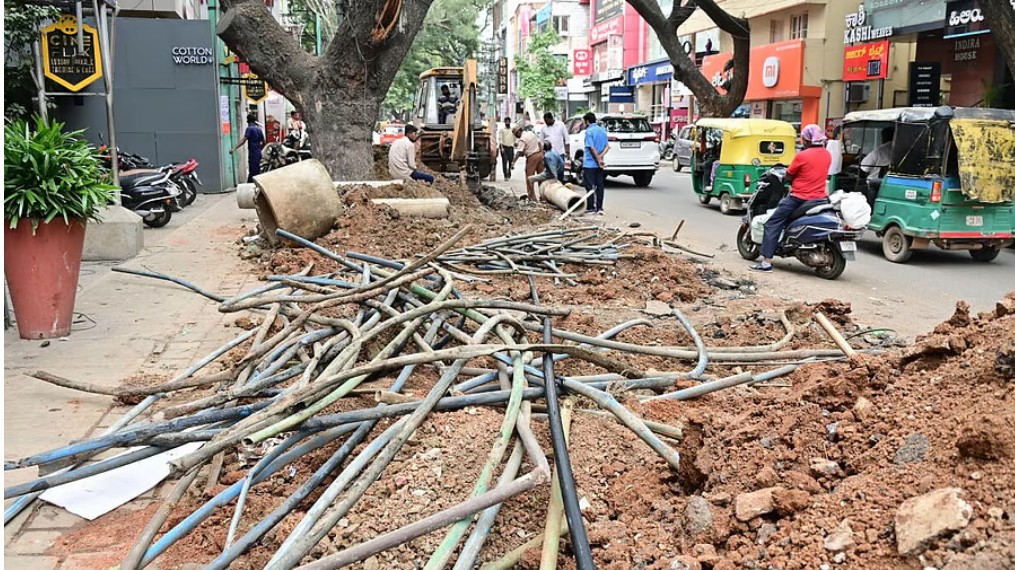
Many water pipelines in Bengaluru were laid nearly 40-50 years ago. While leakage from pipelines is the major cause for water wastage, changing all old ones is capital-intensive. That’s where prioritising the pipelines that need to be changed becomes crucial.
“If we are to change all the old pipelines, it will cost hundreds of crores of rupees. We will have to dig up a large number of roads. It is therefore important to analyse and prioritise works so that it can be taken up in phases,” a senior BWSSB official explained. The BWSSB is also expanding its District Metered Areas (DMA) and installing flow meters to understand where the water is being lost. The DMAs are smaller regions where flow meters are installed to understand the exact amount of water entering the area. This input can then be matched with the billing to understand how much water is being lost.
“At present, we have 665 DMAs and are adding another 513 DMAs to ensure that our entire network is covered. This will help us narrow down the area where works need to be done,” Dr Manjula said. The board has also been cracking down on illegal connections and regularising them to bring UfW further down.
Source: https://tinyurl.com/225h9w4t