


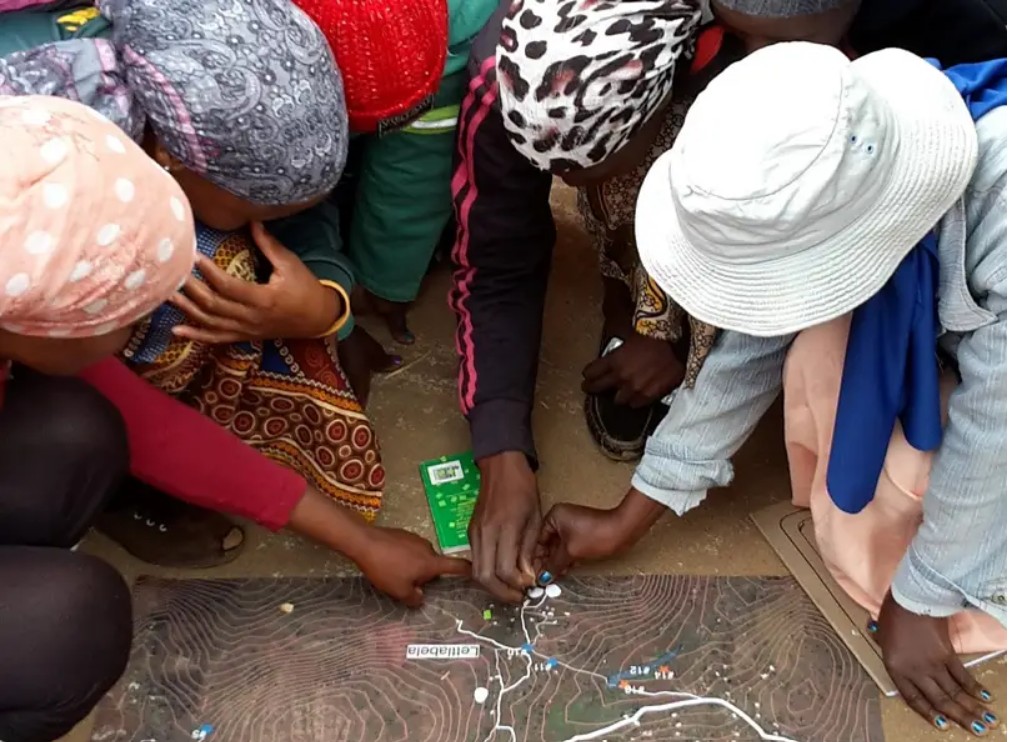
Can stronger community and municipal collaboration keep water services reliable beyond construction and opening ceremonies?
When a new water project is completed, attention turns to what has been built. A reservoir is opened, pipes are laid and pumps are installed. Yet the foundations for sustainability are laid before the ribbon is cut, when communities can help identify needs and shape design, while the system itself is tested after construction teams leave. Infrastructure must then be connected to the people who experience them first.
This is why the 2026 Water Institute of Southern Africa (WISA) Conference, taking place from 22-24 July 2026 under the theme, “Rethink Amanzi-Securing Our Future,” feels so timely. Amanzi means water in isiZulu and isiXhosa, two of South Africa’s official languages. The theme asks us to consider the full infrastructure life cycle and the conditions needed to keep water services reliable and sustainable, such as municipal capacity, reporting pathways, community participation, accountability and trust.
This understanding is also gaining national attention. During South Africa’s State of the Nation Address on February 12, President Cyril Ramaphosa announced a National Water Crisis Committee to coordinate interventions. The announcement signals recognition that the crisis cannot be addressed through infrastructure expansion alone. Strong institutions, effective maintenance and coordinated government action are equally important.
Although South Africa has invested in water infrastructure, this has not always translated into reliable services. A leaking pipe or damaged pump can become an economic and social disruption when faults are detected late, reporting pathways are unclear or municipal teams are managing ageing systems with limited resources. The critical question is how governance pathways enable a problem to be identified, reported, addressed and communicated back to the community.
These questions sit at the heart of the Water Research Commission (WRC)-funded project, Strengthening Community Participation in Municipal Water Services for Improved Water Management in South Africa’s Rural and Low-Income Urban Areas. The International Water Management Institute (IWMI) is implementing the project in partnership with the South Africa’s Department of Water and Sanitation (DWS). For short, we refer to it as AmanziConnect: Connecting Communities and Municipalities for Sustainable Water Services. IWMI researchers and partners are building on their work from 2024, showed that participation should begin during needs assessment, planning and design and continue through construction, monitoring, operation and maintenance, helping to prevent top-down “parachute projects.”
AmanziConnect works to strengthen community participation, local monitoring, while improving communication to support a more responsive municipal system without creating parallel systems or shifting public responsibilities. IWMI researchers are working with Water and Sanitation Community Forums (WSCFs), which DWS began establishing in 2014 in response to service delivery protests and persistent weaknesses in communication and accountability. The forums are intended to provide a structured channel between communities and government, allowing residents to report failures and raise concerns while enabling institutions to share information, explain decisions and provide feedback.
To understand how community participation, reporting pathways and municipal response work on the ground, and where they could be strengthened, IWMI researchers convened engagements from March to June in Lebowakgomo and Thulamela in Limpopo Province, and Bophelong in Gauteng Province, South Africa. Participants included WSCF members, municipal officials, DWS representatives, ward committees, the South African Local Government Association (SALGA) and community organisations. Across the three locations, participants described a persistent gap between reporting water problems and receiving a response. An Economic Development Manager from Capricorn District Municipality’s captured the challenge as “a common vision but operating in silos.”
What we heard on the ground
Forum members are often among the first to know when infrastructure is leaking, damaged or no longer functioning, making them an important source of early warning for municipal teams and planners.
The forums are not intended to replace municipalities. Municipalities remain responsible for water service provision, infrastructure ownership, budgets and major repairs. Community participation should not transfer these responsibilities to unpaid volunteers. The opportunity lies in connecting local knowledge and early warning with municipal systems throughout the infrastructure life cycle, so that community priorities inform planning and design, faults are identified sooner and communities receive clearer feedback.
The engagements also showed that participation cannot be sustained through goodwill alone. Forum members often use their own time, transport and mobile data to attend meetings, report failures and keep communities informed. Participants called for practical support, stronger institutional recognition and skills that create lasting value. As one, member of the Alexandra Water and Sanitation Community Forum noted, “for us to be here today, we spent our own money on transport and data.”
Discussions in both Limpopo and Gauteng provinces also highlighted opportunities to harness local capability to improve water services. With appropriate training, safety measures and municipal authorisation, young people and other community members could contribute to needs assessments, participatory planning, co-design and implementation oversight before and during construction, and assist with inspections, leak detection, structured reporting and clearly defined minor maintenance tasks once infrastructure is in use. Any such approach would need to reinforce municipal authority while creating practical skills and employment pathways.
Building on the issues raised through AmanziConnect, the project team will convene the WISA 2026 session, “Who Keeps Water Infrastructure Working? Rethinking Sustainability Beyond Construction.” The session will bring together WSCF representatives, DWS, the Department of Public Works and Infrastructure (DPWI), National Treasury’s Infrastructure Technical Assistance Facility (ITAF), South African Local Government Association (SALGA), municipal practitioners and researchers to discuss where community responsibility should begin and end, what support forums need, and how participation can be built into infrastructure planning, implementation, operation and maintenance rather than treated as a once-off consultation.
Rethinking amanzi means recognising that reliable water services are not secured when the ribbon is cut. They are shaped before construction and sustained long after it through the everyday systems and relationships that keep information moving, responsibilities clear and institutions responsive. South Africa’s water future will be stronger when communities and municipalities are connected through practical roles, trusted channels and a shared commitment to act.
Source: https://tinyurl.com/yc84pvvp