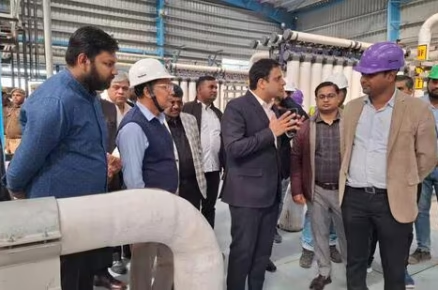


The Noida authority aims to finalise an agency that will work on the latest technology that will be available on reasonable cost, and it will be within the environmental parameters, said officials
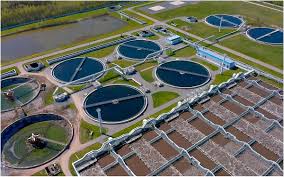
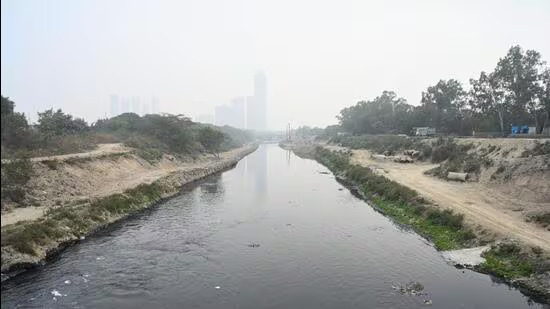
NOIDA: The Noida authority has decided to set up multiple sewage treatment plants (STPs) in the drains to treat wastewater that empties into the Yamuna.
The step aims to ensure that only treated wastewater is dumped into the city drains connected to the Yamuna, said officials on Sunday.
The Authority, in its 221st board meeting on Saturday, approved a proposal to commence work on this ambitious project that will make Noida a “zero discharge city” that dumps zero untreated wastewater into soil or drains, they added.
Currently, Noida has eight STPs, located in sectors 50, 54, 123, and 168, having a capacity to treat 210 million litres per day (mld) of wastewater. These STPs, however, trap, treat, and empty treated wastewater into stormwater drains of residential, commercial, industrial, and other planned areas, including villages. The stormwater drains, meant to channelise only rainwater, have a huge flow of untreated sewer coming from neighbouring areas’ unauthorised localities, said officials.
“In view of this challenge, the Authority’s board has approved the proposal that finds a solution to this issue. The board has allowed us to issue a tender to finalise an expert agency that will work on this project. Our aim is that we empty only treated wastewater into drains once we set up STPs on city drains,” said Lokesh M, chief executive officer (Noida authority) in a statement to HT.
As per the board’s directions, the Authority will issue an expression of interest (EOI) inviting proposals from expert agencies, of which the successful one will be assigned the job. It is likely to issue the EOI any time this month.
The Noida authority aims to finalise an agency that will work on the latest technology that will be available on reasonable cost, and it will be within the environmental parameters, said officials.
The Authority is likely to issue EOI any time this month to start work without any delay.
“We want agencies to give a presentation about their technology and methodology to work on the project so that we can finalise the best one,” the CEO added.
The Authority aims to set up sewage treatment plants at the city’s key drains to treat wastewater with an aim to ensure no untreated wastewater is emptied into the Yamuna.
The board approved this proposal after the national green tribunal (NGT) on August 3, 2022, during a case hearing directed the Authority not to dump untreated waste into the drains, which are finally emptied into the Yamuna. Since then, the Authority has been working on the plan to improve the quality of the treated wastewater to mitigate pollution in the Yamuna, as the NGT had also slapped a INR 100 crore penalty against the Authority for river pollution, said officials.
To escape this penalty, the Noida authority had challenged the NGT’s August 3, 2022, order in the Supreme Court.
The court had given relief from penalty, and since then, heard the case. The Supreme Court will next hear this case on January 21, 2026.
The Authority, in its earlier 219 board, had directed the water works department to seek the opinion of the Central Pollution Control Board (CPCB), the Apex Body of pollution, about these STPs, which require funds of INR 300 crores. The Authority has sought the opinion and now wants to issue EOI, taking the project to the next stage, said officials.
“The CPCB said ‘decide on one’. Therefore, we have decided to build 5 STPs in phase I, and the remaining 6 will be built in the second phase. We need INR 300 crores for these 5 STPs of 90 MLD capacity,” said RP Singh, general manager of the Noida authority heading the water works department.
The Noida authority, in a survey (2024-25), established that there are at least 30 drains in Noida, and these drains are connected with the irrigation drain that begins from Delhi’s Ashok Nagar and merges with the Yamuna at Sector 168 after passing through the city’s central part.
“At least 6 drains remain dry out of these 24, and in eight drains, we have put in an intermittent in-situ methodology to clean the wastewater that flows through them. And the survey conducted by the national environment engineering research institute suggested that at least 11 sewage treatment plants need to be built so that the wastewater can be treated and the untreated is not reached to Yamuna,” said Singh.
The authority will take at least two years to build these five STPs, said officials.
“On September 17, 2025, the SC directed that the CPCB must be kept in the loop while handling the wastewater in the city,” said Singh.
Noida is spread over around 20,000 hectares of land surrounded by the Yamuna, and shares a border with Delhi and Ghaziabad. It has already built 8 STPs having a capacity of 210 million litres daily to trap and treat the sewer of urban areas, which are well-planned, as it wants to empty only treated wastewater into the Yamuna.
“But these 11 drains have wastewater from adjoining villages and other areas, and a major concern because we cannot dump the untreated wastewater into the Yamuna. So once STPs are built, Noida will become a city that dumps zero quantity of wastewater,” said RP Singh, general manager of the Noida authority.
Source: https://tinyurl.com/f67vrntn