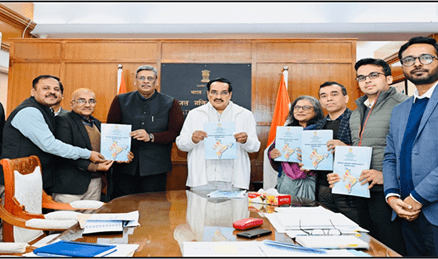



Delhi PWD Minister Parvesh Sahib Singh Verma inspected the ongoing storm water drain improvement project along Rohtak Road (NH-10) and reviewed the progress of additional irrigation and flood-control works aimed at addressing waterlogging issues in several parts of West Delhi as part of the preparations for the monsoons.
During the inspection, the minister expressed satisfaction over the pace of the work and said the project was in its final stage and would soon bring long-awaited relief to thousands of residents who have struggled with water accumulation during heavy rainfall for many years. So far, around 16,000 m of the drain had already been completed, while approximately 2,200 metres of construction work remains, which is currently underway.
The project work began in February 2025 and has progressed steadily since then. Once completed, the upgraded drainage infrastructure will significantly improve storm water management along Rohtak Road and nearby residential areas.
The drain network is being developed along the stretch from Nangloi Railway Metro Station to Tikri Border, with the remaining portion currently under execution between Ghevra Metro Station and Tikri Kalan Metro Station.
Speaking during the inspection, Verma said solving the issue of waterlogging in West Delhi has been a long-standing demand of residents. “For many years, people living in areas such as Mundka, Rajdhani Park and nearby localities have faced severe inconvenience during the monsoon season due to water accumulation on roads and in residential colonies.
The primary project under execution involves the construction and improvement of a large storm water drainage system along the busy Rohtak Road corridor, designed to efficiently channel rainwater and prevent flooding on one of West Delhi’s key arterial roads.
The project includes the development of storm water drains from the Kirari Suleman Drain near Nangloi Metro Station to the Hiran Kudna Drain, covering key stretches between Metro Pillar No. 428 to 626, and further from Tikri Border to Hiran Kudna Drain on both sides of the road.
Officials accompanying the minister informed him that the RCC drain being constructed had a width varying between 1.2 m and 2.25 m, designed to handle heavy storm water flow during peak monsoon conditions.
Source: https://tinyurl.com/nwwmtmz7