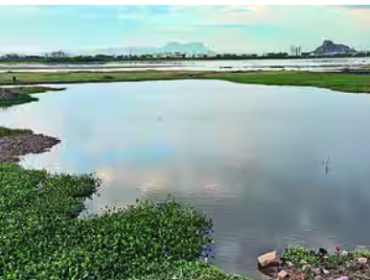




Punjab’s fast-depleting groundwater reserves have emerged as one of the state’s biggest environmental and agricultural challenges, with experts stressing the urgent need for scientific irrigation practices to ensure long-term water security.
According to the 2025 assessment of the Central Ground Water Board, Punjab’s groundwater extraction had reached 156.36 per cent of sustainable limits, largely due to water-intensive paddy cultivation.
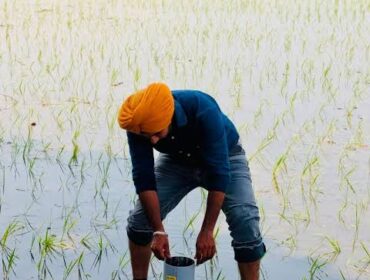
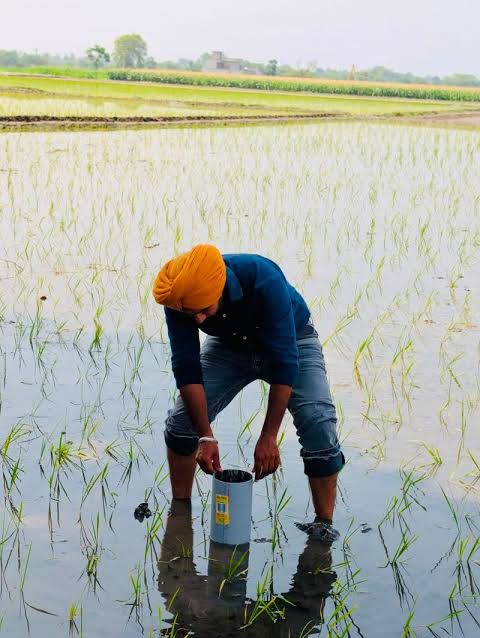
One of the most effective solutions being promoted is Alternate Wetting and Drying (AWD), a scientific irrigation technique that allows paddy fields to undergo controlled drying periods instead of remaining continuously flooded. This method reduces irrigation by three to four cycles per acre, saves 30-35 per cent irrigation water, lowers electricity consumption for tube wells and maintains, or even improves, crop productivity.
Demonstration plots in the past two years recorded an average paddy yield of 27.37 quintals per acre under AWD compared with 24.25 quintals in conventionally irrigated fields. To encourage large-scale adoption, Manav Vikas Sansthan (MVS), with support from The Nature Conservancy (TNC), has implemented Project PRANA (Promoting Regenerative and No-Burn Agriculture) across 18 districts of Punjab. It promotes climate-smart farming through field demonstrations, farmer awareness programmes, technical training and continuous field support.
TNC is one of the world’s largest environmental non-profit organisations, dedicated to conserving the lands and waters. Founded in the US in 1951, the organisation now employs over 1,000 scientists and works across 83 countries to combat climate change and biodiversity loss.
The PRANA project has also introduced sensor-based AWD pipes and digital sensors that enable farmers to monitor underground water levels and irrigate only when required, replacing fixed irrigation schedules with need-based watering.
Since the project’s launch, more than one lakh acres had been brought under AWD across the agrarian state. As part of the initiative, thousands of AWD pipes and hundreds of digital AWD sensors had been installed to support scientific water management.
Abhishek Singh, communication officer at Manav Vikas Sansthan, said Punjab’s groundwater crisis required immediate collective action. He said the AWD had demonstrated that groundwater conservation and sustained agricultural productivity could go hand in hand, adding that wider awareness and adoption of such technologies would be crucial for securing the state’s water future.
Dr Jaswinder Singh Brar, an agriculture expert and former Deputy Director of the agriculture department, maintain that addressing Punjab’s groundwater crisis require coordinated efforts by farmers, researchers, government agencies and civil society to reduce groundwater extraction while ensuring sustainable agriculture.
Source: https://tinyurl.com/53pvkxwp