


As AI accelerates data centre expansion, the technology offers an opportunity to diversify water sources, lower freshwater withdrawals and improve ESG performance.
India is on the threshold of becoming one of the world’s leading destinations for Artificial Intelligence (AI) and cloud computing. Massive investments are flowing into hyperscale data centres that will power everything from digital governance and financial services to healthcare, manufacturing and defence. While discussions around these facilities have largely focused on electricity demand and renewable energy, another critical resource rapidly emerging as a defining challenge is water.
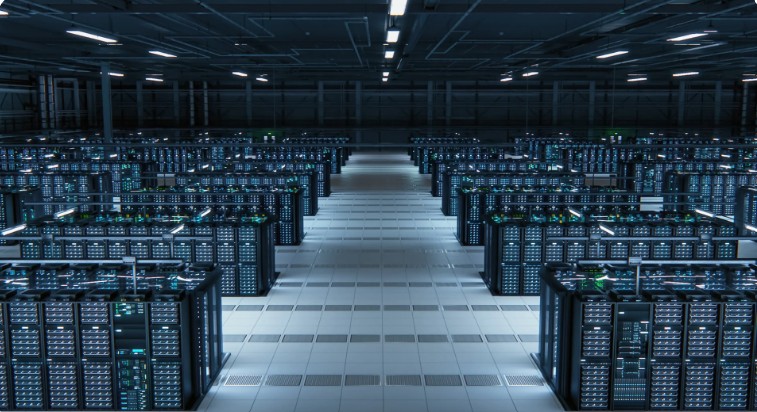
Recent reports indicate that a typical 100 MW hyperscale data centre may require nearly two million litres of water every day for cooling, depending upon the cooling technology employed and local climatic conditions. As India expands its AI infrastructure, the cumulative water demand from hundreds of such facilities could become substantial.
This concern is particularly relevant because many of India’s preferred data centre locations are already facing increasing pressure on freshwater resources. Cities such as Chennai, Bengaluru, Hyderabad, Mumbai and the National Capital Region have periodically experienced water shortages, groundwater depletion, and increasing competition among domestic, industrial and agricultural users. According to NITI Aayog, India’s water demand in various sectors is estimated to far exceed the country’s water availability by 2050.
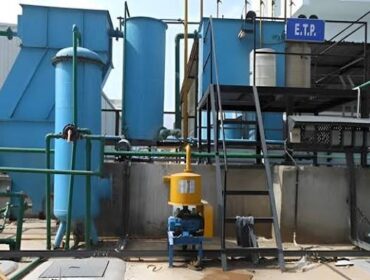
Recognising this challenge, data centre operators are already adopting more sustainable cooling strategies. Desalinated seawater, recycled wastewater, closed-loop cooling systems and advanced liquid cooling technologies are gradually replacing traditional water-intensive cooling methods.
These are encouraging developments that demonstrate the industry’s commitment towards sustainability. Use of new technology A promising technology that deserves serious consideration as part of India’s future water strategy for digital infrastructure is Atmospheric Water Generation (AWG) Technology. AWGs extract moisture naturally present in ambient air and convert it into high-quality water through controlled condensation. The Government of India has approved AWG technology.
This has matured significantly over the past decade and is today being deployed for drinking water, disaster relief, defence establishments, remote communities, and industrial applications in many parts of the world, with the capability of generating millions of litres of water per day as per requirement. AWG’s application for data centre cooling presents an intriguing opportunity. Besides water generation, Atmospheric Water Generators also produce a continuous stream of cool exhaust air as a by-product of the condensation process.
This cool air can be ducted into data centre compartments to supplement conventional air-conditioning systems, thereby contributing additional cooling support and improving overall energy efficiency. Unlike conventional water sources, AWGs produce water directly at the point of consumption. They do not depend on municipal water supply, groundwater extraction or water tanker logistics. Instead, they utilise atmospheric humidity, a renewable resource that is continuously replenished through the natural hydrological cycle.
For data centres located in regions with moderate to high humidity, particularly India’s coastal belts and tropical regions, AWGs could supplement conventional water sources and reduce dependence on stressed freshwater supplies.
Equally important is the scalability of the technology. AWGs are available in capacities of up to 5,000 litres per day (LPD). For hyperscale data centres requiring significantly larger water volumes, multiple 5,000 LPD units can be interconnected in modular horizontal or vertical configurations. The generated ultra-pure water can be channelled into a central storage facility and integrated with a closed-loop cooling system, enabling continuous water availability with virtually no water wastage. Presently, such centralised AWGs are being used for bottling plants. Water generated from atmospheric moisture contains extremely low levels of dissolved minerals.
For cooling systems, this offers operational flexibility because the water chemistry can be engineered for optimum performance. Appropriate corrosion inhibitors, anti-scaling compounds and heattransfer additives can be introduced to achieve the desired conductivity, pH and cooling characteristics required for advanced closed-loop cooling systems. Rather than treating inconsistent raw water from different locations, operators can begin with a consistently pure water source and formulate the cooling medium according to equipment specifications. This approach has the potential to reduce scaling, improve heat exchange efficiency, extend equipment life and lower maintenance requirements.
Naturally, detailed engineering studies would be required to optimise additive formulations, evaluate long-term material compatibility and establish lifecycle economics. Nevertheless, this concept merits serious technical evaluation. Perhaps the greatest strategic value of AWGs lies beyond engineering. An additional co-benefit is that the same AWG installation can simultaneously provide safe, clean and high-quality drinking water for data centre operations and maintenance personnel, thereby addressing both process water and potable water requirements from a single sustainable technology platform. Water availability is increasingly becoming a decisive factor during site selection and environmental appraisal of new data centres.
Large freshwater withdrawals often attract regulatory scrutiny and community concerns, particularly in water-stressed regions. Data centres capable of generating a significant portion of their cooling water on-site could substantially reduce dependence on municipal supplies and groundwater resources. Such an approach would strengthen Environmental, Social and Governance (ESG) performance, reduce potential conflicts with local communities and support faster environmental approvals by demonstrating responsible water stewardship. While regulatory decisions depend on multiple statutory considerations, reducing freshwater dependence could positively contribute to environmental assessments.
This is particularly important as India seeks to attract global AI investments while simultaneously pursuing sustainable development goals. AWG should not be viewed as a standalone solution. Rather, it can become one component of an integrated water management strategy that combines recycled wastewater, rainwater harvesting, desalination where appropriate, closed-loop cooling technologies, condensate recovery and intelligent water monitoring systems. Different climatic zones will require different combinations of AWG technologies.
Coastal regions may rely more heavily on desalination and AWGs, while inland facilities may prioritise wastewater recycling and rainwater harvesting. The objective should be to minimise freshwater withdrawals through diversified, resilient and climate-appropriate water sourcing. Agenda for actions India is uniquely positioned to lead this transformation by using the AWG technology. The country possesses indigenous expertise in AWG, advanced cooling technologies, artificial intelligence and sustainable engineering. Research institutions, industry and government agencies can collaborate to evaluate the techno-economic feasibility of AWG-assisted cooling under different climatic conditions.
A national pilot programme involving MeitY, research institutions, water experts and the data centre industry could establish benchmarks for water generation, energy efficiency, lifecycle costs and environmental performance. Such evidence would enable informed policy decisions and encourage innovation in sustainable digital infrastructure. The future of AI will not be determined solely by computing power or electricity availability. It will also depend upon how responsibly nations manage the water resources that support this digital revolution.
If India succeeds in integrating innovative technologies such as AWG into a broader sustainable water management framework, it can pioneer a new generation of water-resilient, environmentally responsible and globally competitive Green Data Centres. In doing so, India would not merely build the world’s AI infrastructure; it could set the global benchmark for ensuring that digital progress and environmental stewardship advance together.
Source: https://bit.ly/4g8qw6D