



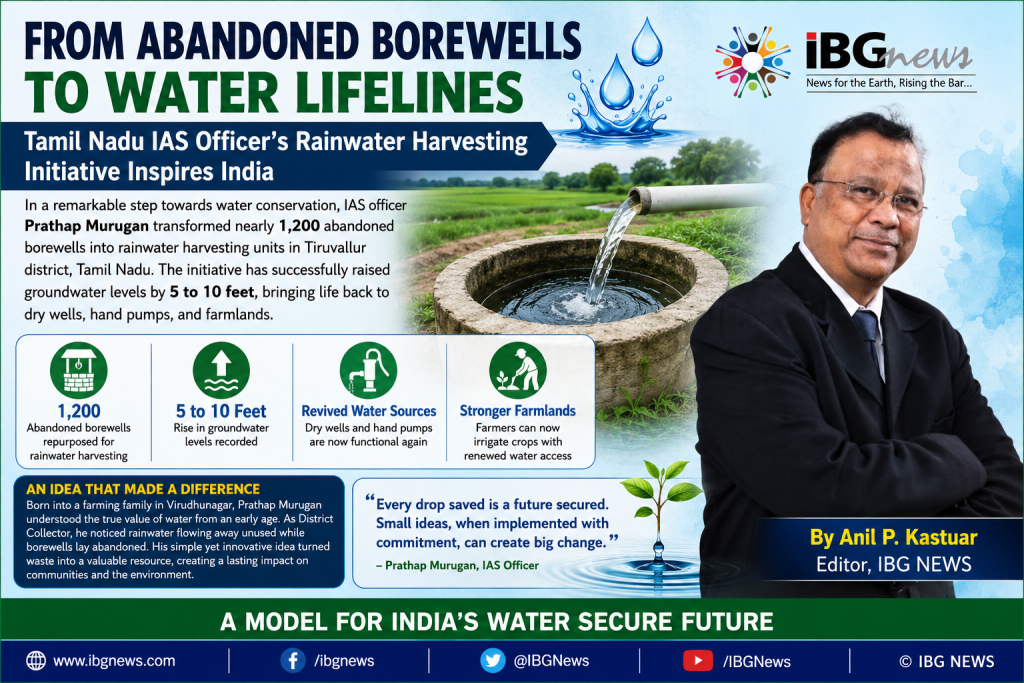
In an inspiring example of sustainable water management, a pioneering initiative in Tamil Nadu has demonstrated how innovation and environmental stewardship can transform a region’s water security. By converting nearly 1,200 abandoned borewells into rainwater harvesting structures, an administrative intervention has significantly improved groundwater levels, offering a practical model that could be replicated across India.
The initiative was led by IAS officer Prathap Murugan during his tenure as the District Collector of Tiruvallur district. Instead of allowing defunct borewells to remain unused, they were redesigned to channel rainwater deep into the ground during the monsoon season. The result was remarkable: groundwater levels reportedly increased by five to ten feet, reviving wells that had remained dry for years.
The impact extended far beyond water conservation. Hand pumps that had stopped functioning began supplying water once again, reducing the dependence of many villages on water tankers. Farmers also benefited as the restored groundwater helped support irrigation, providing renewed confidence to agricultural communities struggling with recurring water shortages.
Prathap Murugan’s commitment to water conservation is rooted in his own upbringing. Born into a farming family in Virudhunagar, he witnessed firsthand the value of every drop of water. Growing up, careful water management was a part of daily life, shaping his understanding of the challenges faced by rural communities. Those early experiences later influenced his approach to public administration.
While serving in Tiruvallur, Murugan observed a growing crisis. Farmers were drilling borewells to greater depths in search of water, often without success. At the same time, heavy monsoon rains continued to flow into drains and canals, with much of the water leaving the area before it could replenish underground aquifers. Recognising this imbalance, he introduced the idea of using abandoned borewells as recharge points, allowing rainwater to naturally restore depleted groundwater reserves.
The initiative highlights how existing infrastructure can be repurposed to address one of India’s most pressing environmental challenges. Rather than investing in expensive new systems, the project made effective use of resources already available, demonstrating that sustainable solutions can also be cost-effective.
With climate change, irregular rainfall, and increasing pressure on groundwater resources affecting many parts of the country, experts believe similar rainwater harvesting models could be adopted in other states. Such community-focused conservation efforts not only improve water availability but also strengthen rural resilience and promote long-term environmental sustainability.
The success of Tiruvallur’s initiative serves as a reminder that thoughtful governance, combined with innovative thinking, can create lasting solutions for future generations. As India continues to face growing water challenges, projects like this offer a blueprint for conserving one of the nation’s most precious natural resources.
Source: https://tinyurl.com/bdfj96kv