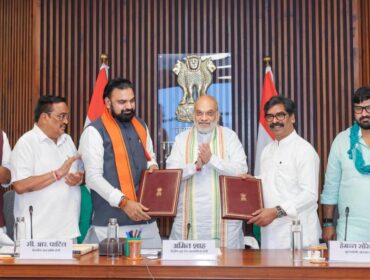



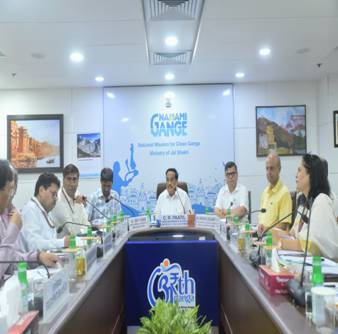
Union Minister for Jal Shakti Shri C.R. Paatil chaired the 19th Meeting of the Empowered Task Force (ETF) on River Ganga, reviewing the progress of the Namami Gange Programme and outlining priorities to accelerate river rejuvenation through improved infrastructure, scientific water management, wastewater reuse and stronger institutional coordination.
The meeting was attended by Minister of State for Jal Shakti Shri Raj Bhushan Chaudhary, senior officials from the Ministry of Jal Shakti, the National Mission for Clean Ganga (NMCG), participating state governments and representatives from key Central Ministries.
Reviewing the programme’s achievements, the Minister noted that 524 projects worth Rs. 43,031 crore have been sanctioned under Namami Gange, of which 363 projects have been completed. The programme has incurred an expenditure of over Rs. 21,550 crore, reflecting sustained progress across the Ganga basin states.
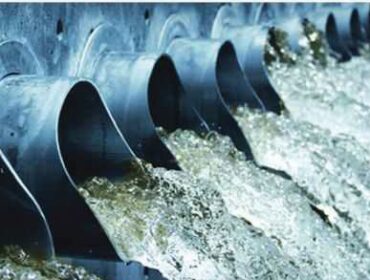
Significant advancement has also been made in sewerage infrastructure. Of the 218 sewerage projects sanctioned, 145 projects have been completed, creating and rehabilitating approximately 4,263 MLD of sewage treatment capacity along with more than 4,611 km of sewerage network. During FY 2025–26 alone, an additional 538 MLD of treatment capacity was added, taking the cumulative capacity created to around 4,260 MLD.
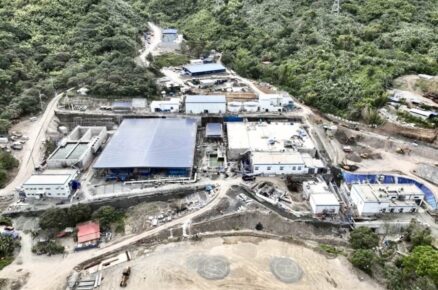
The Minister reviewed recently commissioned and ongoing projects, including the trial testing of the 100 MLD Dhandhupura Sewage Treatment Plant in Agra, expected to significantly reduce untreated wastewater entering the Yamuna, and the commissioning of the 55 MLD Bhagwanpura STP in Varanasi, inaugurated by Prime Minister Shri Narendra Modi. The Varanasi facility also incorporates a 750 kW solar power plant to support its operational energy requirements.
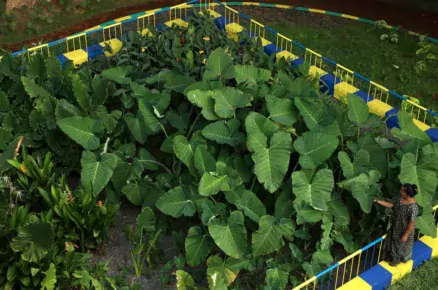
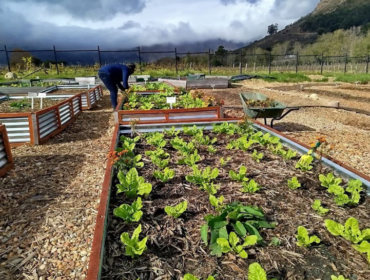
The meeting also highlighted the growing role of Nature-based Solutions (NbS) in river restoration. Progress was reviewed on the constructed wetland systems being developed for in-situ treatment of the Shastri Park and Kailash Nagar drains in Delhi, incorporating ecological restoration measures such as desilting, embankment strengthening, aquatic plantations and stone pitching.
Public participation under the Namami Gange Programme also received attention. The Minister appreciated large-scale awareness campaigns organised during World Environment Day 2026, involving plantation drives, cleanliness activities and community engagement across nearly 125 Ganga districts.
Biodiversity conservation initiatives were another key focus. These included the river ranching programme led by ICAR-CIFRI to restore native fish species, the community-led rejuvenation of Bihar’s Baya River, and the successful rescue of a stranded Gangetic Dolphin using India’s first Dolphin Ambulance. The meeting also noted that the number of Ramsar wetlands within the Ganga Basin has increased to 35, strengthening wetland conservation across the basin.
Recognising groundwater as a critical component of river health, the Minister reviewed progress on developing a Standard Operating Procedure for engineered groundwater recharge and the identification of priority intervention districts by the Central Ground Water Board (CGWB). He called for coordinated implementation of groundwater recharge measures to improve long-term water security.
A major agenda item was the Safe Reuse of Treated Wastewater (SRTW). The meeting reviewed the completion of City-Level Reuse Action Plans (CLRAPs) for Agra, Prayagraj and Varanasi, identifying opportunities to utilise treated wastewater in thermal power plants, railways, irrigation and urban landscaping. The Minister directed that treated wastewater must comply with prescribed quality standards before reuse and instructed state departments and urban local bodies to expedite implementation while strengthening monitoring and quality assurance mechanisms.
The meeting also assessed progress on environmental flow monitoring, sewerage infrastructure, land acquisition, DPR preparation, groundwater recharge, aerial drainage mapping, sand mining management and City Sanitation Action Plans. Shri Paatil directed implementing agencies and state governments to accelerate pending activities and ensure timely execution.
Concluding the meeting, the Minister reiterated that the rejuvenation of the Ganga requires sustained collaboration among Central and State Governments, urban local bodies, scientific institutions and local communities. He emphasised that expanding sewage treatment infrastructure, promoting treated wastewater reuse, conserving wetlands and biodiversity, adopting Nature-based Solutions and integrating groundwater management are essential to achieving the vision of a clean, uninterrupted and resilient Ganga while strengthening India’s long-term water security.
Source & Image Credit: https://bit.ly/4awCcxV