


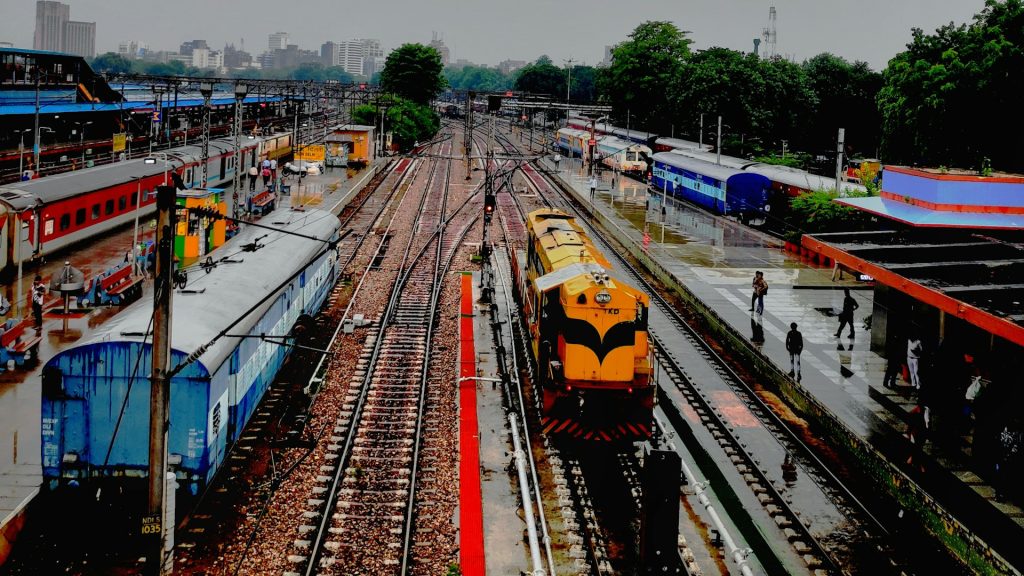
The Railway Board has renewed its focus on installing atmospheric water generators across its network.
In a recent policy directive addressed to all zones, production units, and public sector undertakings, the ministry outlined a deployment strategy for the atmospheric water generators.
The mandate prioritises installing the atmospheric water generators at railway stations, hospitals, staff colonies, offices, and remote level crossings experiencing acute water scarcity.
Harvesting water from thin air:
The atmospheric water generators units operate via advanced condensation technology, extracting moisture directly from ambient air and transforming it into high-quality potable water. The multi-stage process draws in humid air, removes dust via physical filters, cools the air for condensation, purifies the liquid via ultraviolet (UV) treatment, and injects minerals like calcium and magnesium for optimal taste.
The systems achieve peak efficiency in environments with over 30% relative humidity and can consistently produce up to 1,000 liters of fresh water per day.
Following successful regional trials at Secunderabad and Mumbai stations, the network-wide scale-up will first target drought-prone zones with atmospheric water generators, including North Central Railway hubs like Shankargarh, Chunar, and Chopan.
Backdrop:
The scaling of atmospheric water generators integrates directly with Indian Railways’ broader ESG framework. By eliminating the need to tap deeply depleted local water tables, the technology addresses a critical ecological challenge.
Furthermore, the fiscal mechanism driving this project relies on a dedicated green financing policy. Since May 2016, the Railway Board has allocated 1% of the cost of all sanctioned infrastructure projects directly into a fund reserved for environment-related works. These ring-fenced funds are earmarked specifically for capital outlays in water conservation, solar energy plants, and natural air conditioning.
Impact:
The large-scale rollout of atmospheric water generators delivers socio-environmental benefits:
- Zero Groundwater Depletion: By shifting to a nature-based solution that taps atmospheric vapour, the network moves closer to a circular water loop.
- Carbon Footprint Reductions: Generating decentralised water directly at the point of consumption bypasses the heavy carbon emissions associated with traditional pipeline infrastructure and long-distance water tanker transport.
- Self-Sufficiency for Remote Assets: For workers stationed at isolated level crossings and far-flung cabins, atmospheric water generators ensure an uninterrupted, self-sustaining stream of safe drinking water during intense heat waves.
“Atmospheric water generators provide an innovative and environment-friendly solution by generating potable water directly from moisture present in the air. These systems can reduce dependence on conventional water sources and support sustainable water management,” said Ajay Jha, Director, Railway Board, in the official communique guiding the zonal implementation.
Source: https://tinyurl.com/4mvuu3hy